

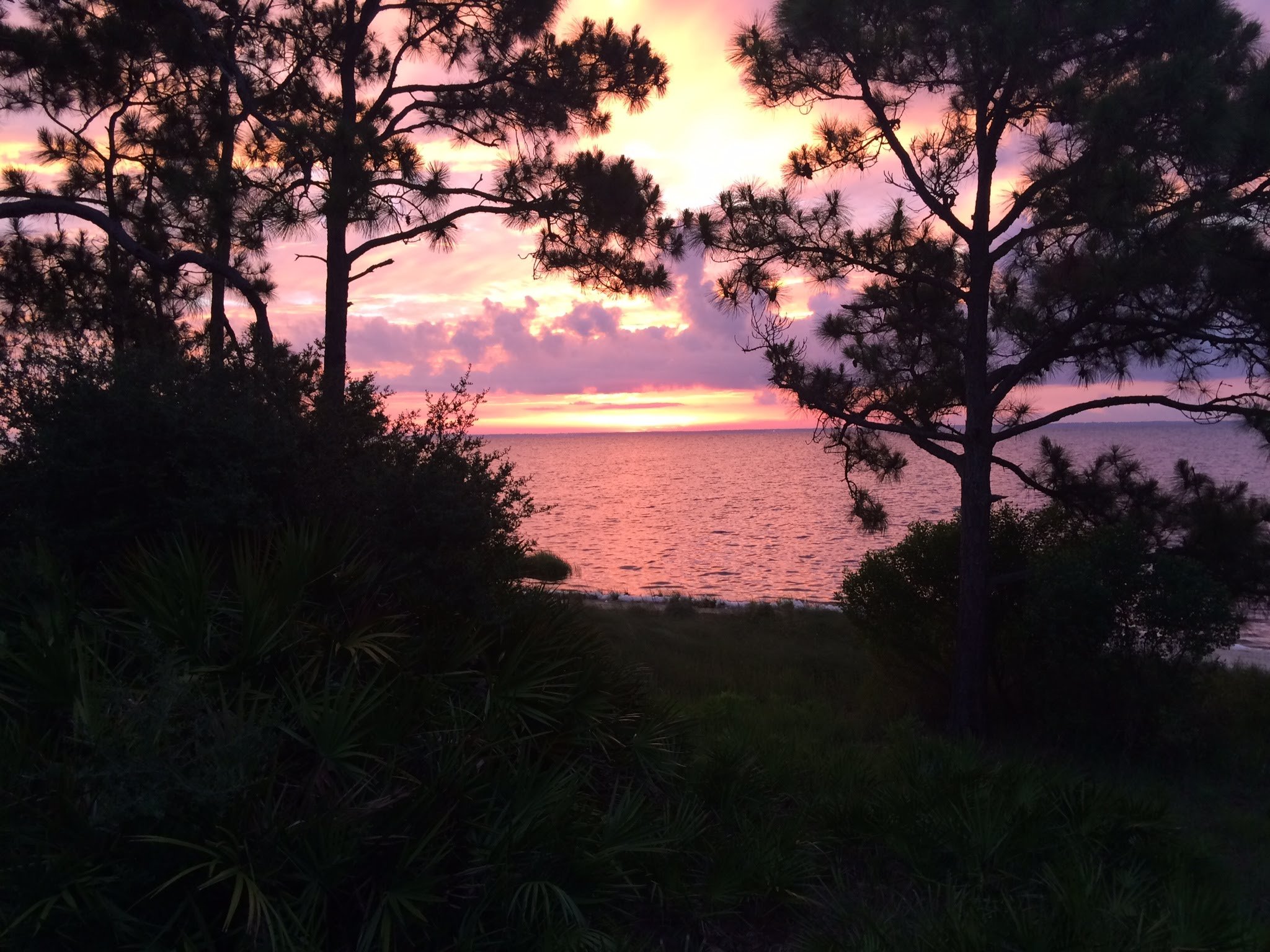
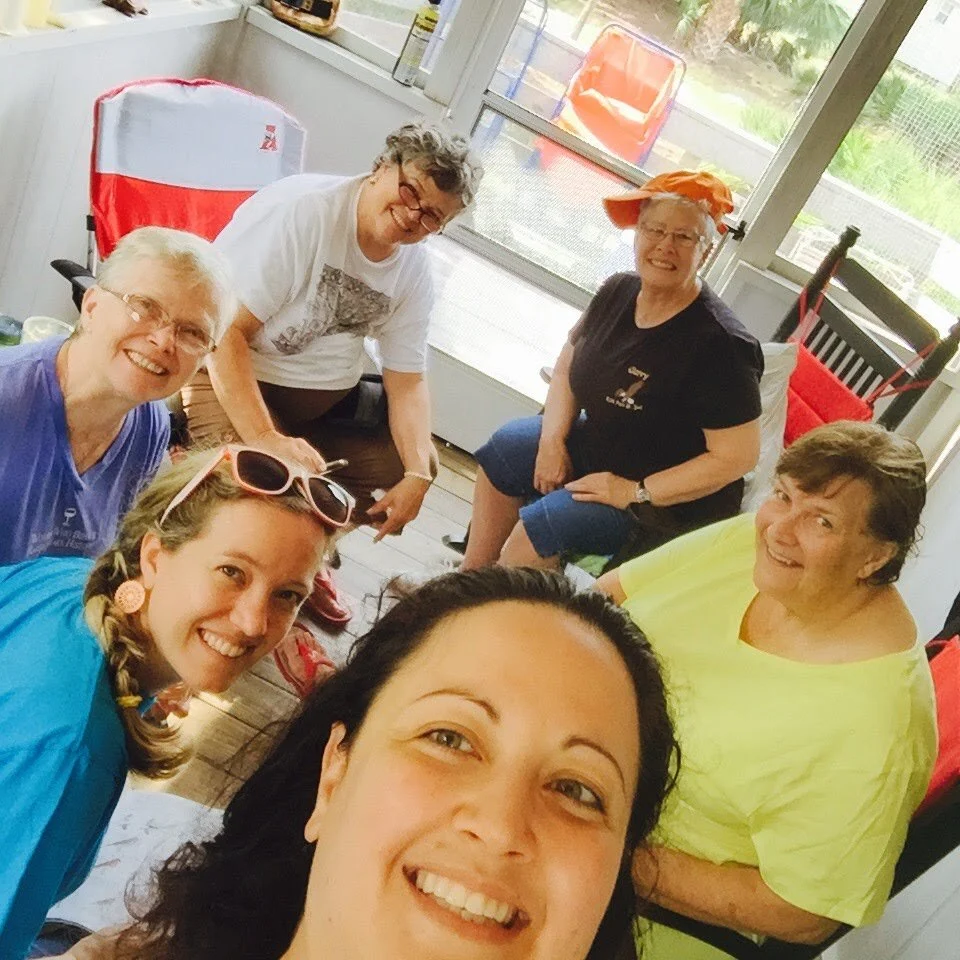
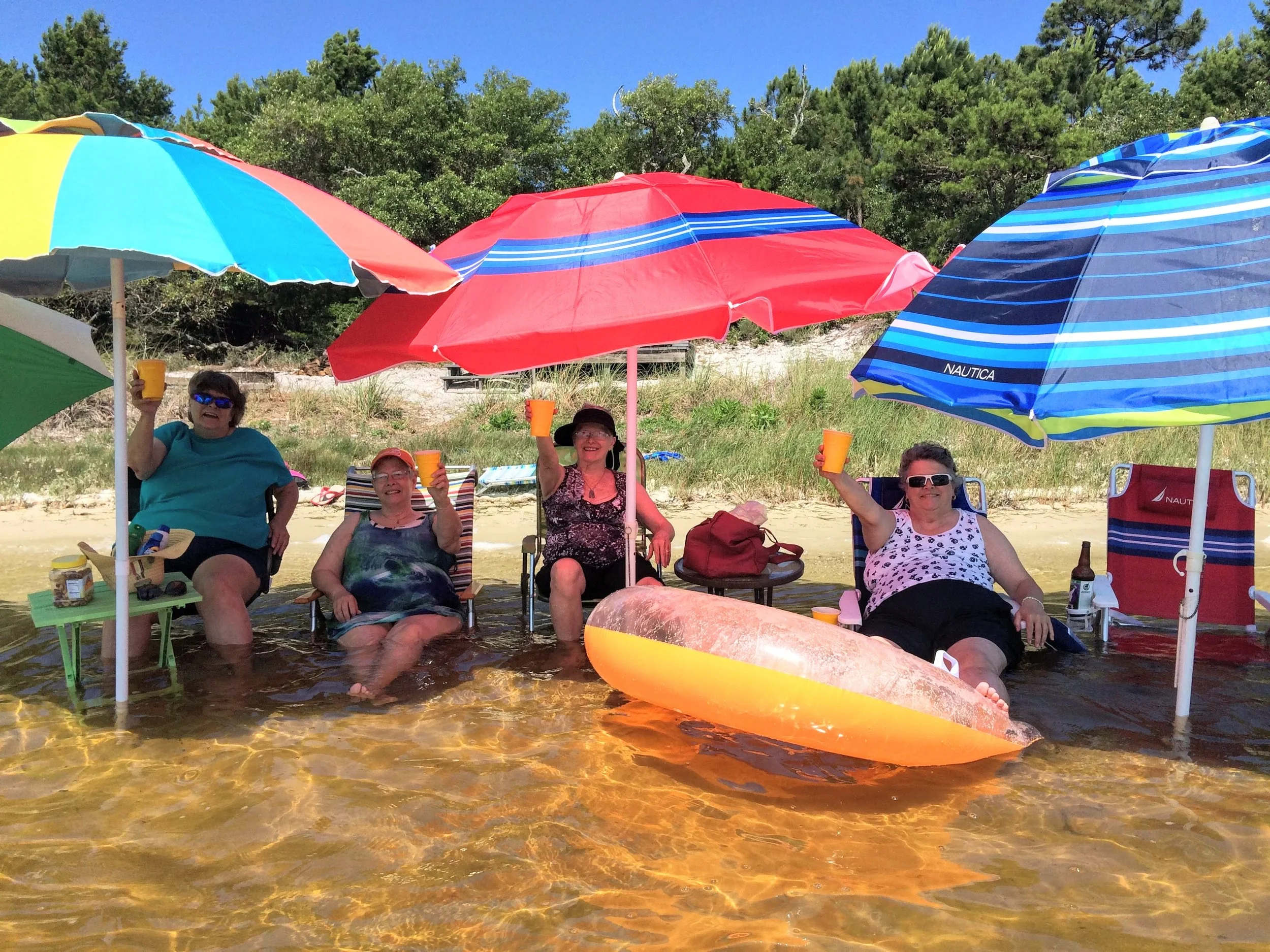
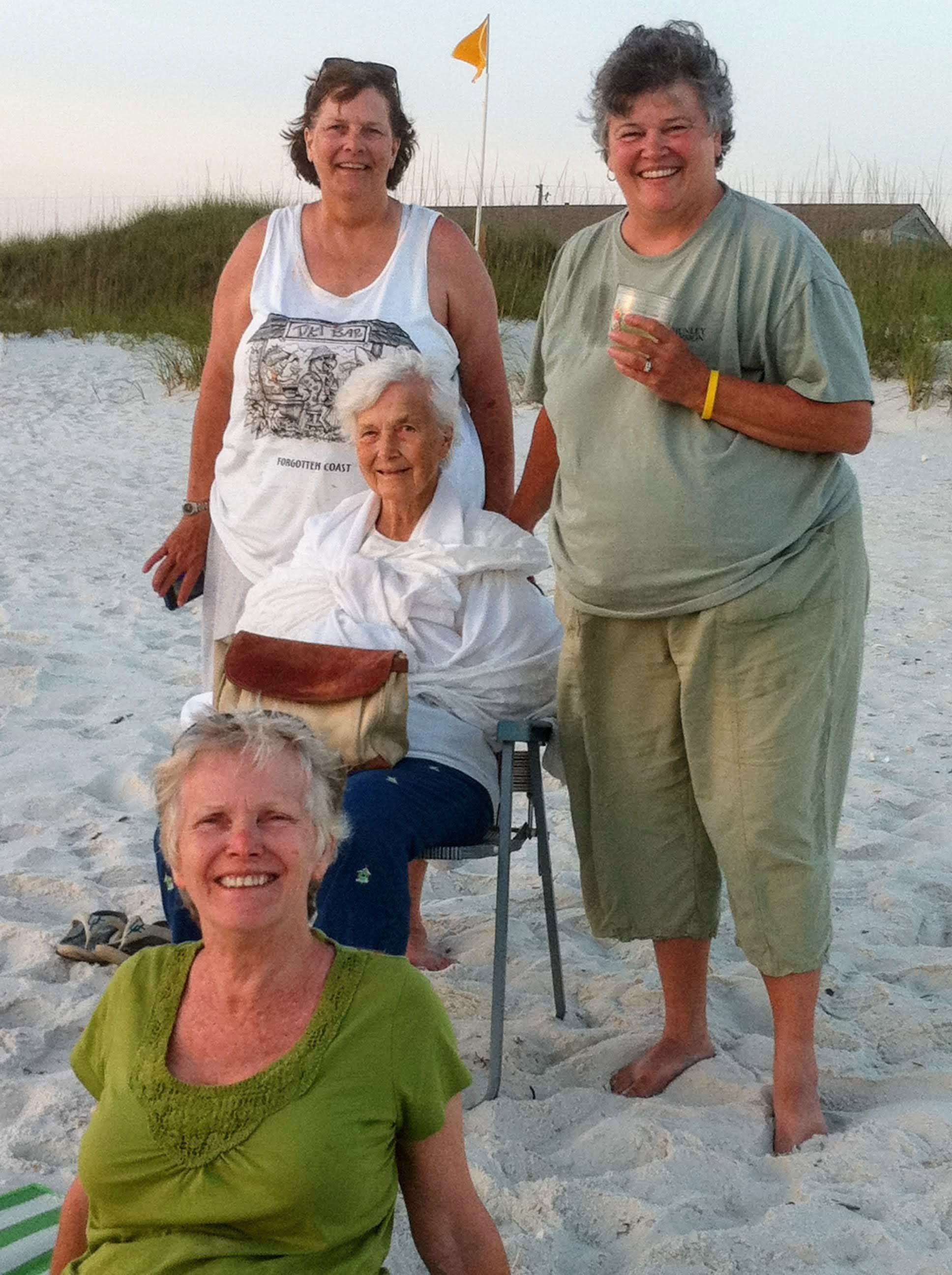
Every year the matriarchs of the Gunter family made a pilgrimage to Florida's Forgotten Coast.
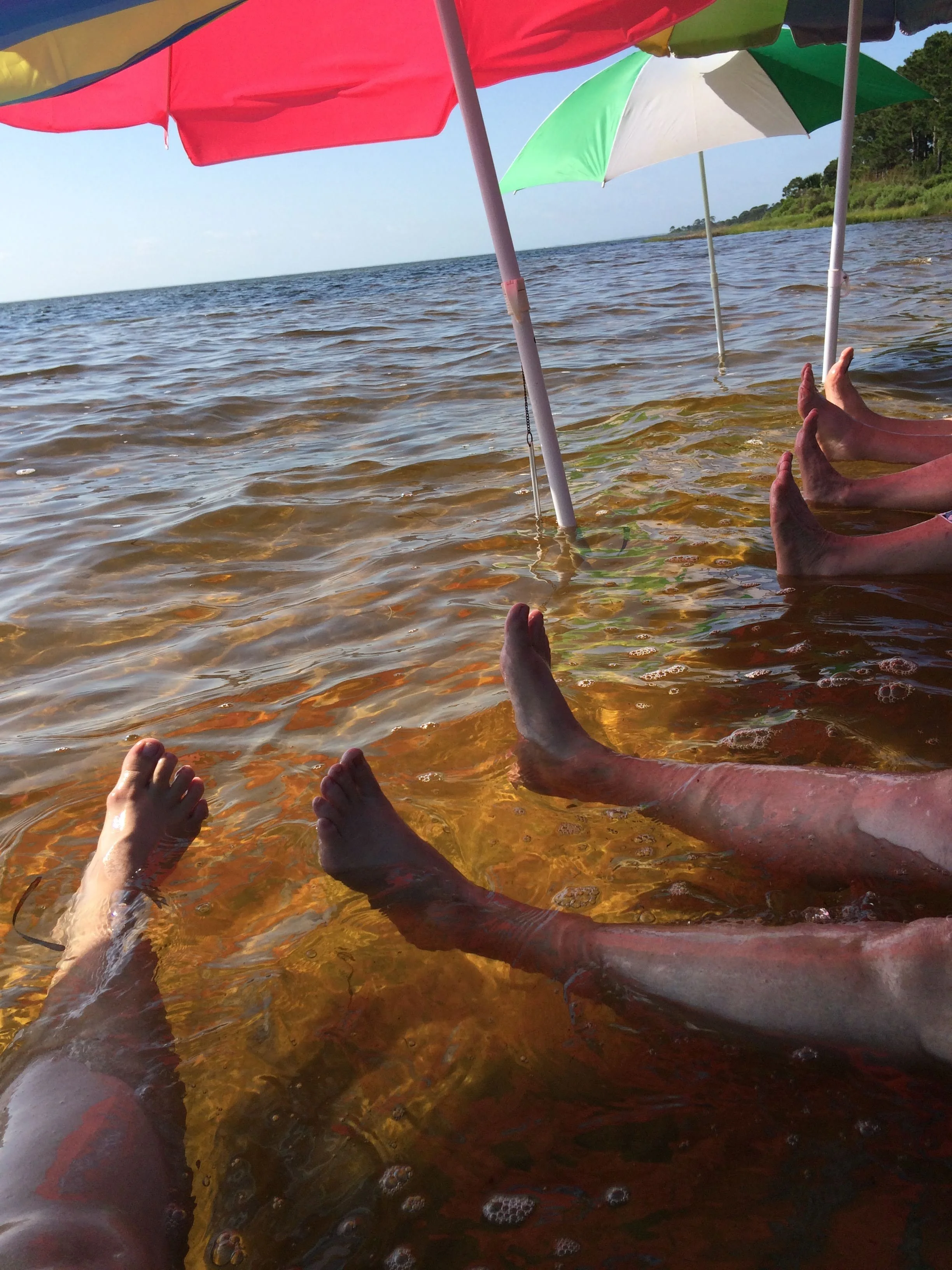
Not the Florida of mouse ears, crowded beaches, sunscreen-covered tourists, and long lines. Their Florida. The stretch of coastline many Floridians quietly call Real Florida, where longleaf pines lean into the wind, the water is stained the color of steeped tea, and the pace of life slows to match the tides. It also happened to be the perfect halfway point for the sisters, scattered across the Southeast, to meet for a week with everything they required: nature, quiet beaches, one another...and a cabin with air conditioning.
The drive was part of the ritual.
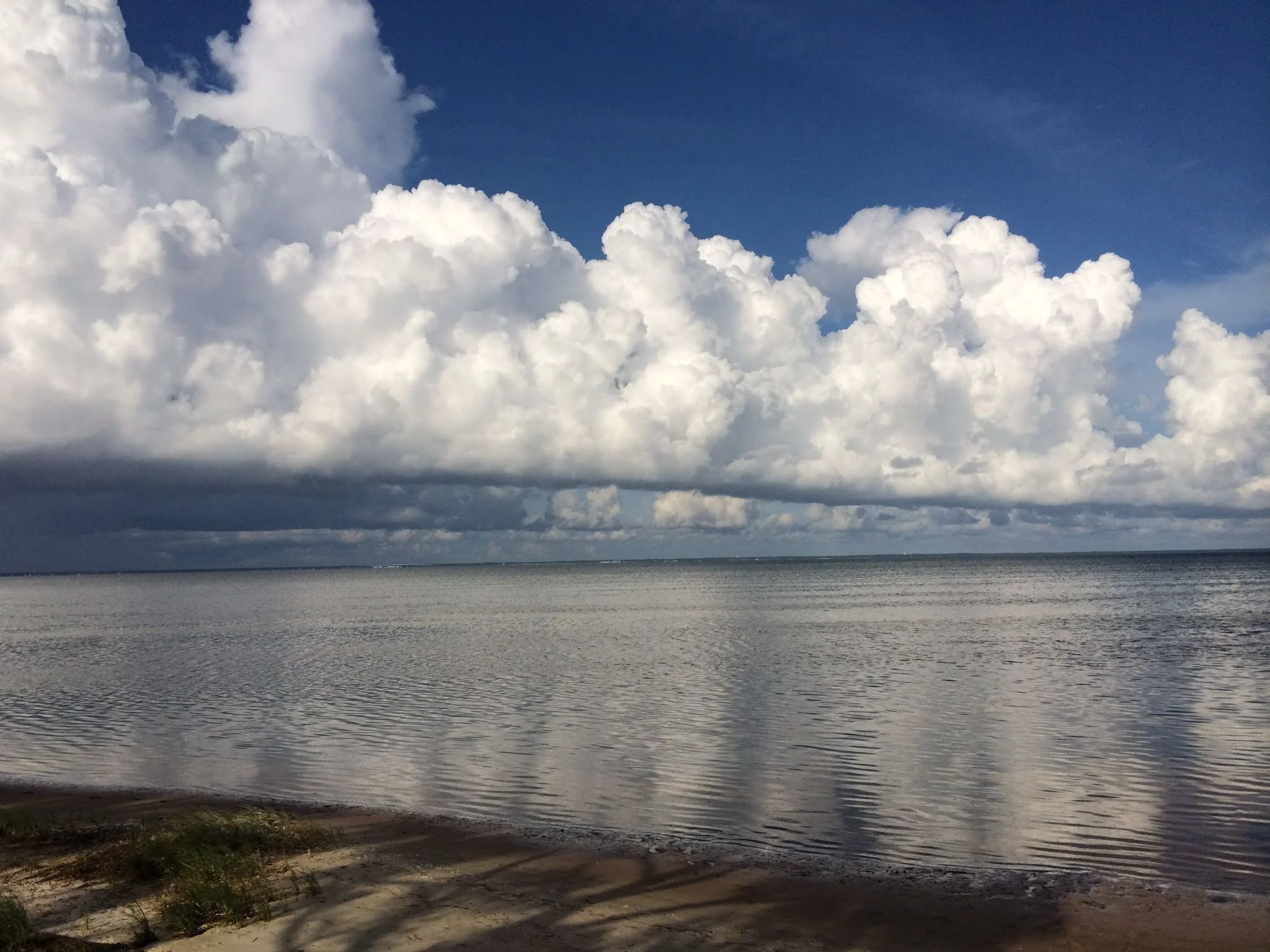
Most of it wound through forgotten back roads dotted with abandoned country stores and little towns that seemed to exist only because no one had yet decided to erase them. If we timed it right, the roadsides exploded with wildflowers, turning long stretches of highway into ribbons of color. The closer we came to the coast, the more the landscape seemed to exhale. Cypress knees pushed through tea-colored water. Great blue herons stood motionless waiting for breakfast. The road curved alongside Apalachicola Bay, flickering between the shade of towering pines and the relentless Florida sun while stiff palmetto fronds rattled together in the salt breeze.
By the time we crossed into Port St. Joe, it felt like we'd left one world for another.
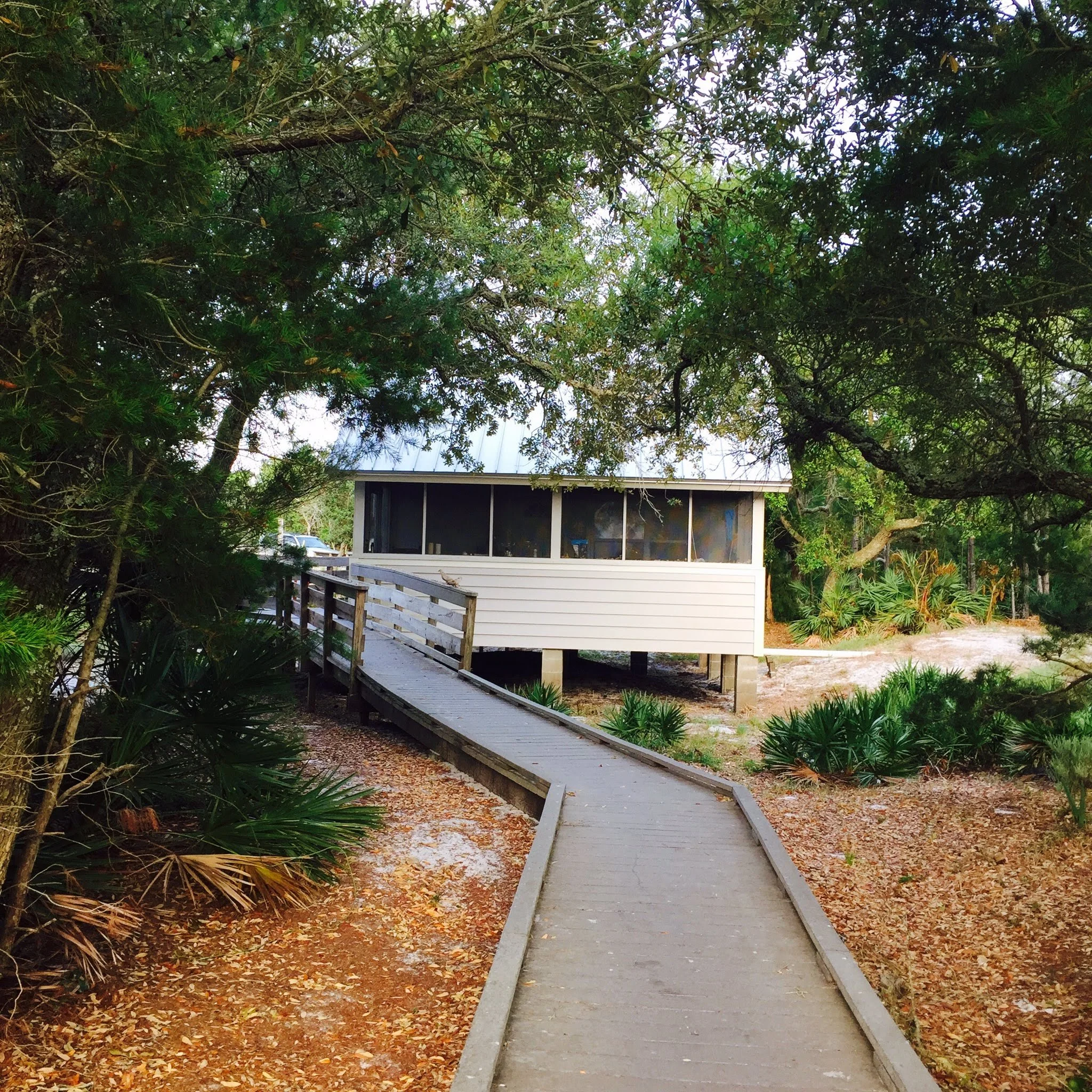
For fourteen years our destination was T.H. Stone Memorial St. Joseph Peninsula State Park. The cabins sat quietly on the bay side of the peninsula, tucked into a place where Indigenous communities once lived and where shell middens still remind visitors that people have called this coastline home for thousands of years.
Florida has always been a place shaped by water, and nowhere is that more obvious than here. Hurricanes regularly redraw the landscape. Hurricane Michael carved through the dunes, temporarily turning the peninsula into an island and taking the cabins we loved with it. We haven't been back since. Maybe that's why I keep returning to this place in my mind.
Because what made it special was never the cabin.
It was who gathered inside it.
About a week after every trip, the annual competition began. Booking one of those cabins required military-level coordination, four determined sisters, ReserveAmerica, questionable internet connections, and a remarkable amount of random button pushing. Somehow, despite every technological obstacle imaginable, they almost always managed to secure another week together. Every year it felt like a small miracle.
That week belonged to them.
For seven or eight days there were no husbands to feed, no children needing rides, no jobs demanding attention. The conversations wandered the way only sisters' conversations can. Family stories became recipes. Recipes somehow became blood pressure medication. Someone would remember a cousin nobody had thought about in years. Old disagreements softened with time and eventually became punchlines.
Mostly, they rested.
Looking back, I think that's what made those trips so extraordinary. These women had spent most of their lives caring for everyone else. For one week each year, they simply got to be sisters.
Preparation began months before anyone packed a suitcase. Meals were planned in advance because once we arrived, nobody wanted to think about cooking unless they felt like it.
Mama tripled her pimento cheese and cooked extra Florida shrimp to divide among everyone before heading home. Aunt Ginger packed her olive cheese spread. Aunt Lynn brought pecans from her grove, pound cake, and whatever dessert had most recently come out of her kitchen. There were casseroles, chicken pot pie, tomato sauce, beans and sausage, and enough food to comfortably feed a small army.
Then there were the jars.
Corn relish.
Fig preserves.
Pepper jelly.
Pickled vegetables.
Squash pickles.
No Southern table feels complete without something pickled, fermented, or preserved somewhere within reach.
At the time I assumed everyone simply brought what they were known for. Looking back now, I realize they were carrying pieces of home to one another. Every cooler represented an afternoon someone had spent earning their ‘pecan thumb’ shelling pecans, stirring tomato sauce, standing over a table of jars, or making sure there would be enough pimento cheese for everyone to take a little home again.
Food was how they cared for each other.
When I was finally invited to join the matriarchs, I knew it was no small thing. They guarded their peace carefully, and being included felt like stepping into a tradition that had existed long before I arrived. My favorite part wasn't even the beach (and it was still pretty damn fantastic). It was opening the coolers and knowing I was going to get to take some things home and snack on long after when vacation became just memory. The squash pickles weren’t always on the menu so I would always get a little extra excited when I unpacked them.
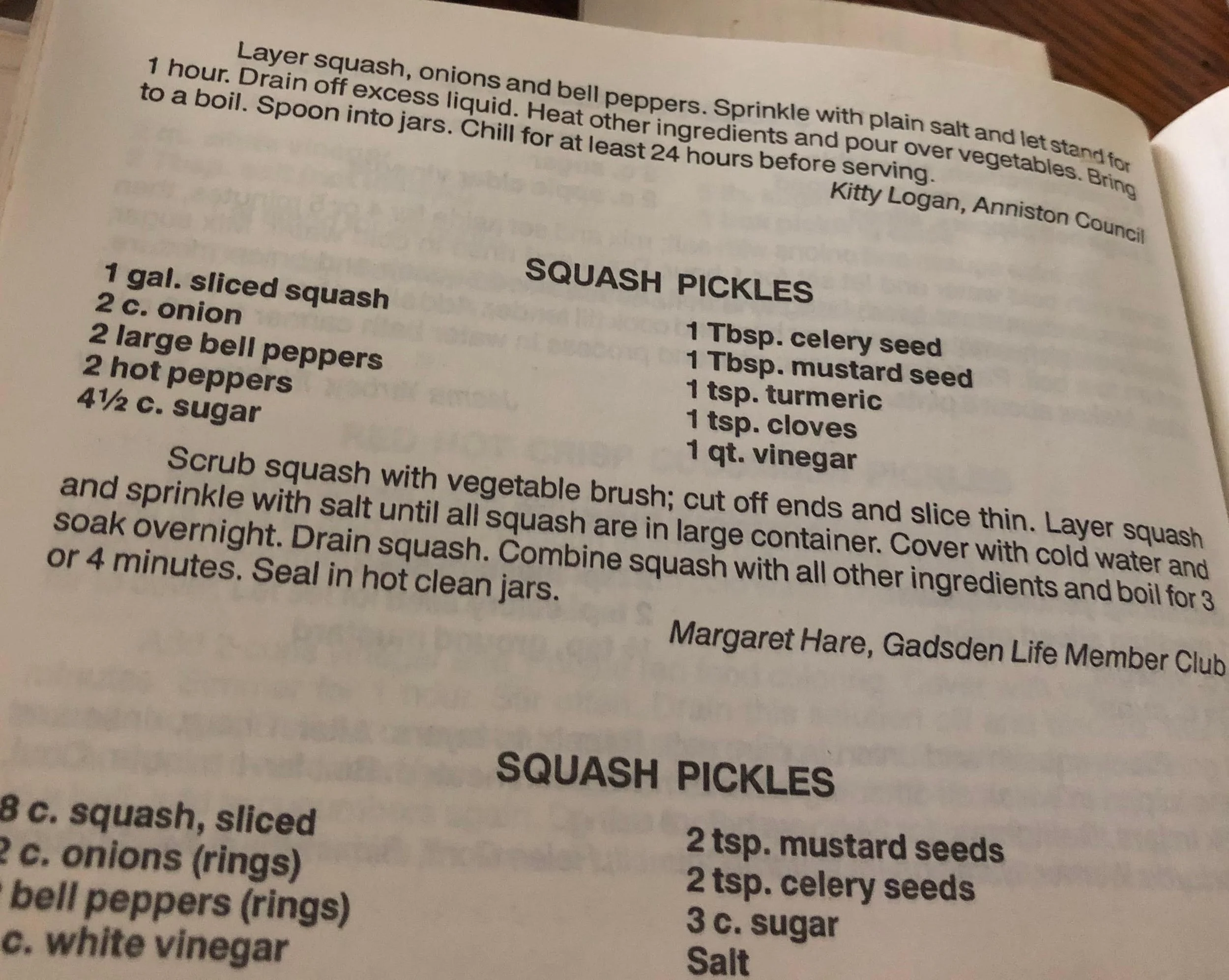
We served the squash pickles with herb-stewed red kidney beans, white rice, and smoked kielbasa sausage. It is already a beautiful meal—the soft, fluffy rice, smoky spiced sausage, and kidney beans stewed with onions, garlic, and oregano. But then you put those cold, vibrant rings of sweet-and-sour squash on top of the hot beans and rice and suddenly you have sweet, sour, salty, smoky, and, for me, spicy all on the same plate. I always spooned a little pickle juice over mine so it could work its way down into the rice.
I don't remember if I was ever outwardly giddy when this meal showed up, but you can guarantee I was on the inside.
I'm typically a fast eater. Years of working in kitchens will teach you how to shovel down a quick bite standing over a trash can. So when a meal makes me full stop and slowly savor it, I know something magical has happened.
One time I attempted to gather wood and get the grill working to cook the sausage, but the labor of it just didn't fit the theme of the trip. More often than not, vacation convinced us that a cast-iron skillet on the stove was perfectly acceptable.
Most evenings ended around the screened porch table as the light softened over the bay, paper plates balanced on our laps while everyone added spoonfuls of this and dollops of that. Mornings were just as slow. I'd wake not long after my mother, and we'd sit on the porch drinking coffee and reading while the birds and squirrels picked through the seed someone had put out.
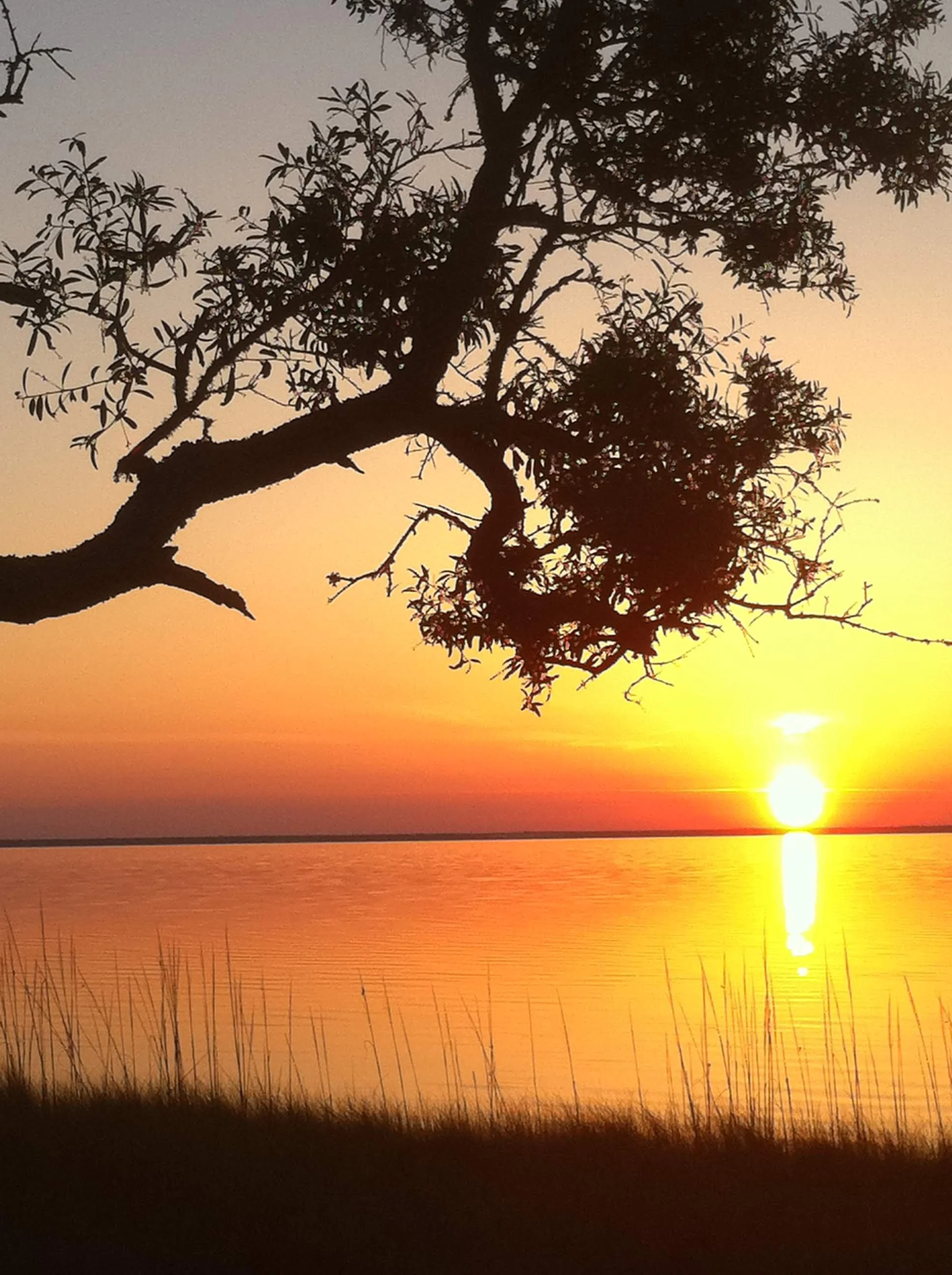
In the earlier years, when everyone was a little more ambitious, we'd hike across to the Gulf through what the Gunter sisters begrudgingly named the "dune of tears." The novelty of that eventually wore off. But one thing was nonnegotiable: before we left, we had to take GranMonkey to the Gulf side to "put her toes in the sand." We'd bring blankets and chairs and spend the evening watching the sunset, hoping to catch the elusive green flash just as the sun slipped below the horizon.
Those are the moments I keep with me now. Not souvenirs. Moments packed into little mason jars, placed on the shelves of my mind.
Years later, after Hurricane Michael, I found myself texting Aunt Lynn for her squash pickle recipe.
She lives about eight hours north in an 1890s farmhouse surrounded by a hundred-acre pecan grove in rural Alabama. An old dirt road still runs past the house—the original main street before the town slowly shifted elsewhere.
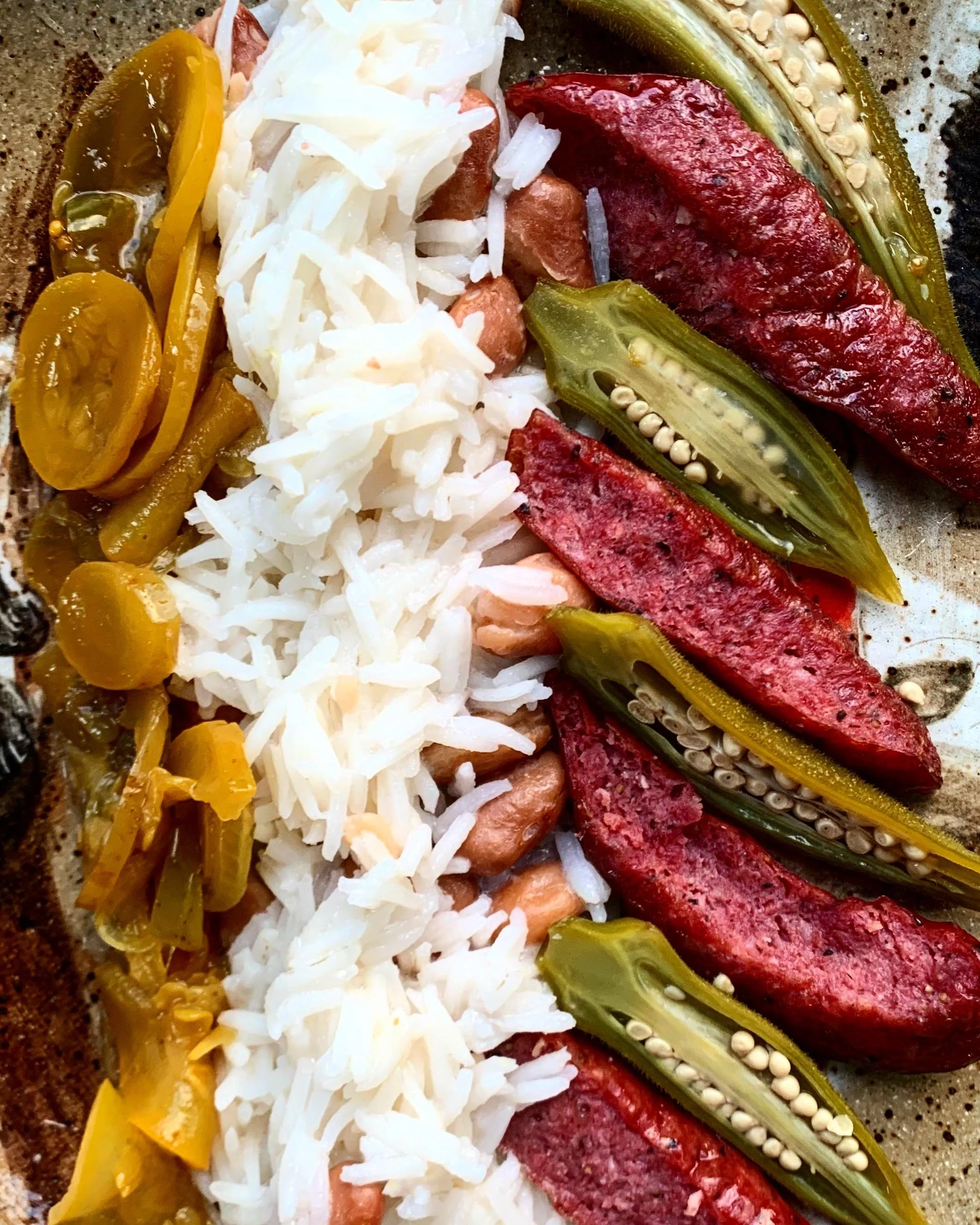
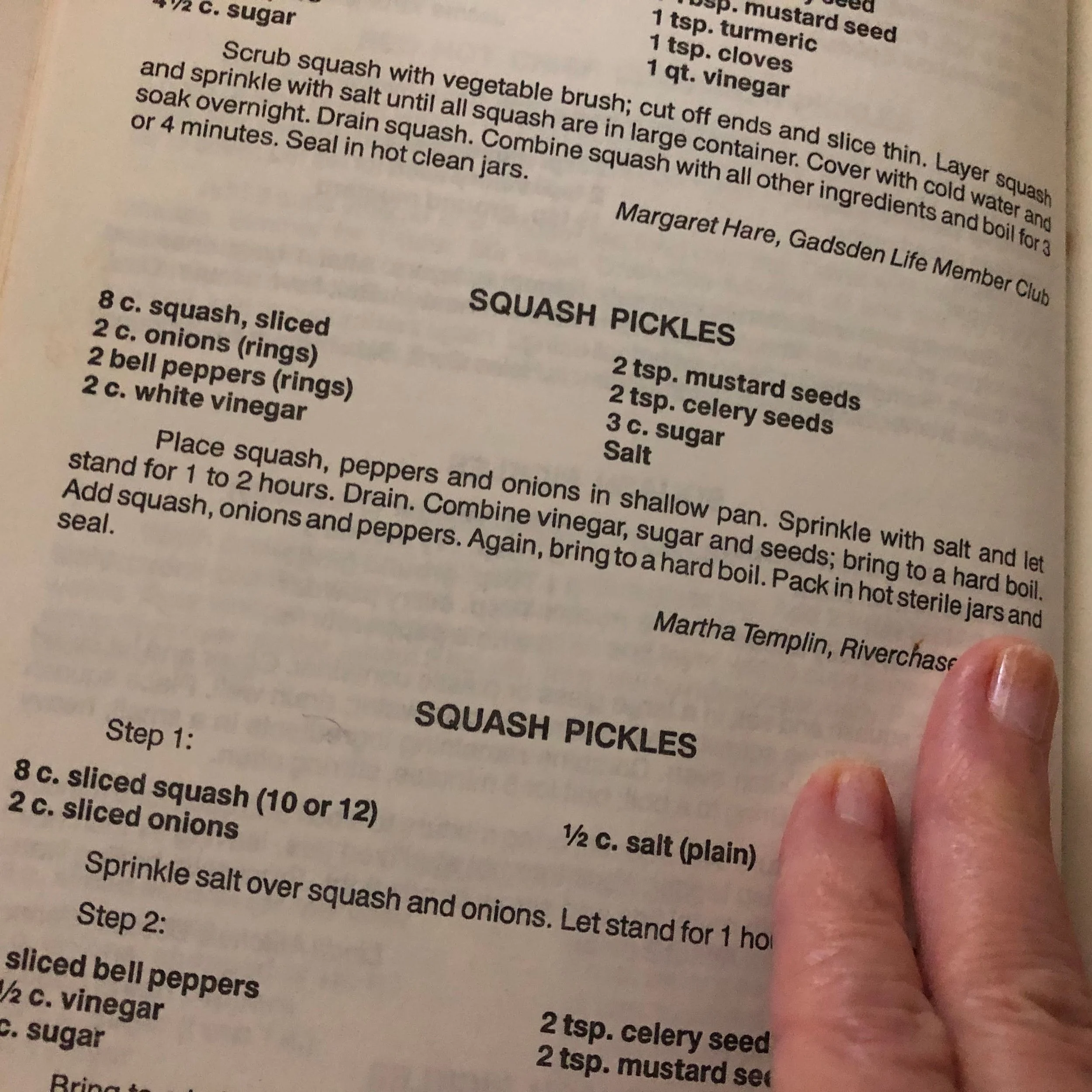
When Aunt Lynn answered my text, she walked over to the bookshelf and pulled down a worn community cookbook. Not a family cookbook. Not a handwritten collection carefully passed from mother to daughter. Just one of those little church and ladies' auxiliary cookbooks found in kitchens all across the South, filled with recipes submitted by women whose names most of us will never know.
The pages were stained. The measurements were sparse. The instructions assumed you already knew the parts of the recipe that mattered. The invisible instructions weren't forgotten. They had simply never needed to be written down.
Then Aunt Lynn laughed. "The recipe I make isn't really either one of these. I add more turmeric and don't add cloves or hot peppers."
Years ago, she and her younger sister, Ginger, used to put up bushels of squash together every summer. Somewhere along the way, they started pulling from both recipes. Between the two recipes—and between the two sisters—they quietly became one.
I had spent years believing those squash pickles were a special family recipe. They weren't. They were already an adaptation.
A few weeks later, in my attempt to make my own pickles, I drove out to Fisher Farms to buy some squash. Confidently, I announced that I wanted a whole bushel. Thankfully they only had a half bushel available. About halfway through slicing squash, sterilizing jars, making brine, and wondering why I insist on turning every project into a marathon, I realized a half bushel was more than enough.
I started with Aunt Lynn's recipe. Then I looked back at the two originals. Then I listened to her notes. Then I started making changes of my own. I put the hot peppers back in because I love a little heat. I added fresh ginger and turmeric from the garden. And unlike Aunt Lynn, I kept one of the cloves, just not as many. No cloves.
By the time the jars cooled on the counter, the recipe had changed once again.
Not dramatically.
Just enough that it had quietly become mine.
Somewhere in the middle of making those pickles, I realized I'd misunderstood tradition.
I thought keeping a tradition alive meant making it exactly the way it had always been made. But that's not what these women did. They used what the garden or farmstand gave them. They borrowed recipes from neighbors. They combined two versions into one. They cooked from memory, changed the seasoning, and made things work for their own kitchens.
I don't know who Margaret Hare or Martha Templin were. I don't know if they ever met. I doubt either of them imagined that decades later two sisters in Alabama would combine the recipes they'd submitted to a community cookbook—or that years after that, someone in Florida would change them again.
Funny how recipes travel farther than the people who write them.
There's always something exciting and comforting about opening a jar of something homemade. A little emotional too when you realize it's the last one.
But the second my taste buds get ahold of those squash pickles, my mind heads straight down memory lane and the floodgates open.
Sometimes I'm back on that screened porch in Port St. Joe. I’m sitting next to matriarchs. I can hear GranMonkey telling her daughters, "This was a good batch."
I smile.
I agree.
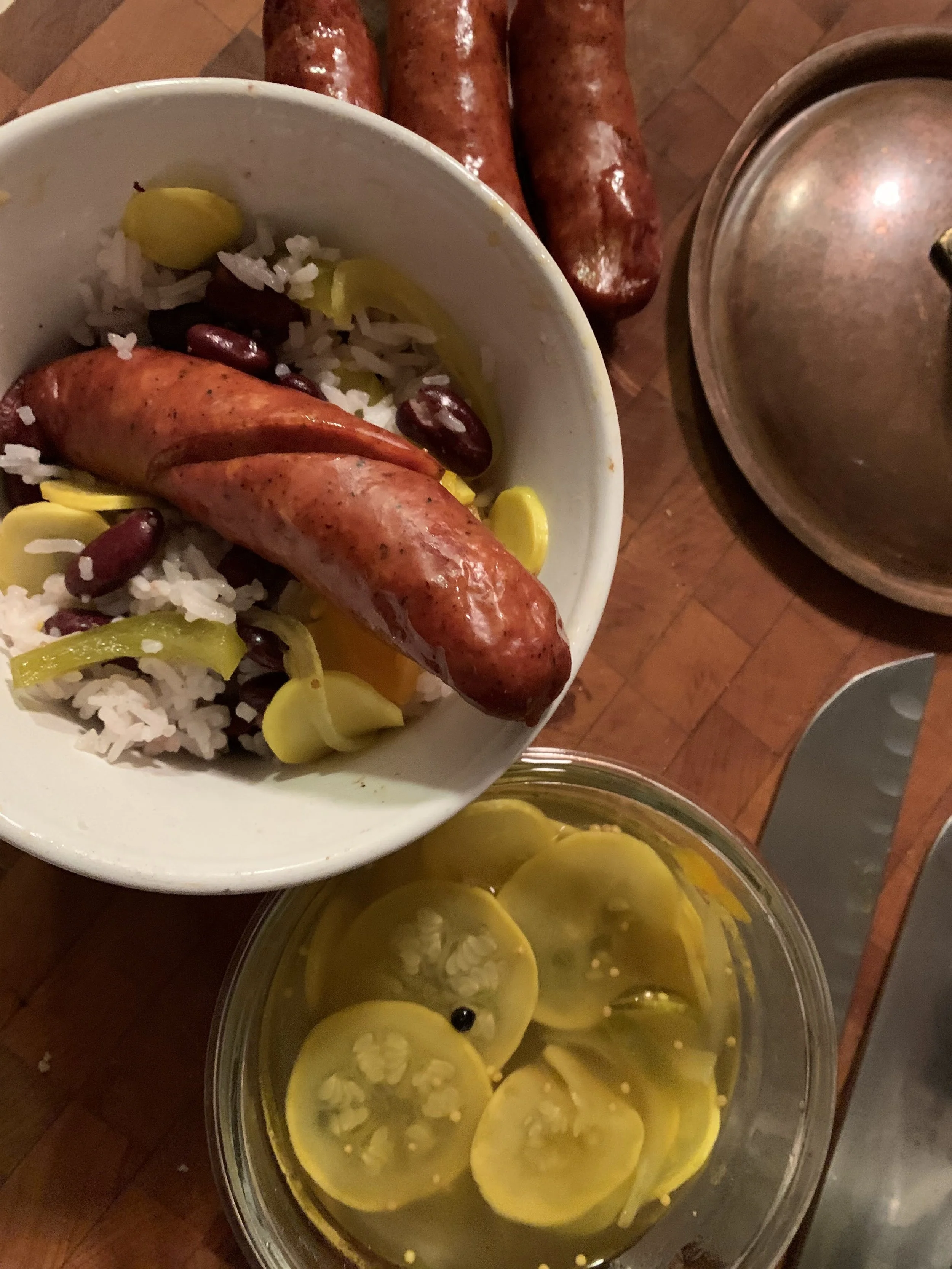
Aunt Lynn’s Squash Pickles
The version I carry forward, adapted from Aunt Lynn’s recipe.
Yield: about 8-10 pints · Prep: 1 hour · Cook: 20 minutes
Ingredients:
1 gallon of thinly sliced yellow squash or zucchini
2 cup white onion, julienne
2 bell pepper, assorted colors, julienne
2 hot peppers, sliced in half
3 1/2 cup white raw sugar
1.5 quart white vinegar
1 tablespoon yellow mustard seed
1 tablespoon celery seed
6 each whole cloves
1.5 teaspoon turmeric
2 tablespoons salt
Method:
Slice squash into thin rings into a large bowl. Salt squash and let stand for a minimum of one hour or overnight. Add all the other ingredients into a pot and bring to a boil. Strain squash and add to the pot and cook 3-4 minutes only. Remember there will be carry over cooking and the squash are thinly sliced. Pack in sterile jars leaving a 1/4 inch gap from the top of the jar. Seal jars in boiling water using standard canning procedures.
This story is part of Food as Geography, a Food Stories Project collection exploring the ways food carries place, memory, people, and tradition.
